Published
[Travel in the United States] Guide to American voltage and American sockets, do you need an adapter/transformer?
Millions of people travel to the United States every year, hoping to see this diverse and vibrant country. From Hollywood movies to NBA basketball games, from magnificent natural landscapes to world-class theme parks, everything attracts the attention of travelers from around the world. . However, do you know what the voltage is in the United States? What type of sockets are there in the United States? In order to ensure that your electronic equipment can be used normally in the United States, these are all issues that must be considered. This article will introduce US voltage and US socket specifications in detail, hoping to help you prepare before traveling.

What is the US voltage standard?
The voltage in the United States is 110V - 120V, and the power supply frequency is 60 Hz, which is the same as Canada, Mexico, Taiwan and other regions. If you bring electrical appliances from the above regions to the United States, you do not need to use a transformer.
When bringing electrical appliances to the United States from Hong Kong, Australia, New Zealand, the United Kingdom, Italy, Germany, India and other regions with standard voltages of 220 to 240V, you must pay attention to whether the input voltage of the electrical appliance is compatible, otherwise you will need to bring another one Use the transformer plugged into the adapter to avoid damaging electrical appliances.
Historical Background of the United States Voltage System
Due to historical background or geographical conditions, different countries and regions have chosen different voltage standards. For example, most parts of Europe use the 220V voltage standard, while the United States uses 110-120V. This is because the United States chose a lower voltage standard based on geographical conditions during early power grid construction. The history of choosing to use 110V voltage in the United States can be traced back to the late 19th century. Under the technical and resource conditions at that time, compared with high voltage, the use of low voltage was considered a safer choice at the time, especially for household electricity. aspect.
In addition, market demand is also an important factor affecting voltage standards. Countries may decide voltage standards based on their own market needs and industrial structures. For example, the United States adopts the 110-120V voltage standard mainly because most electrical equipment is designed according to this standard. Changing the voltage standard will bring huge costs and difficulties. Japan has chosen the 100V voltage standard mainly because Japanese electrical equipment has higher voltage stability requirements, and using a lower voltage can better ensure the normal operation of the equipment.
What is a standard US outlet?
There are two types of sockets used in the United States: Type A (two-hole socket) and Type B (three-hole socket).
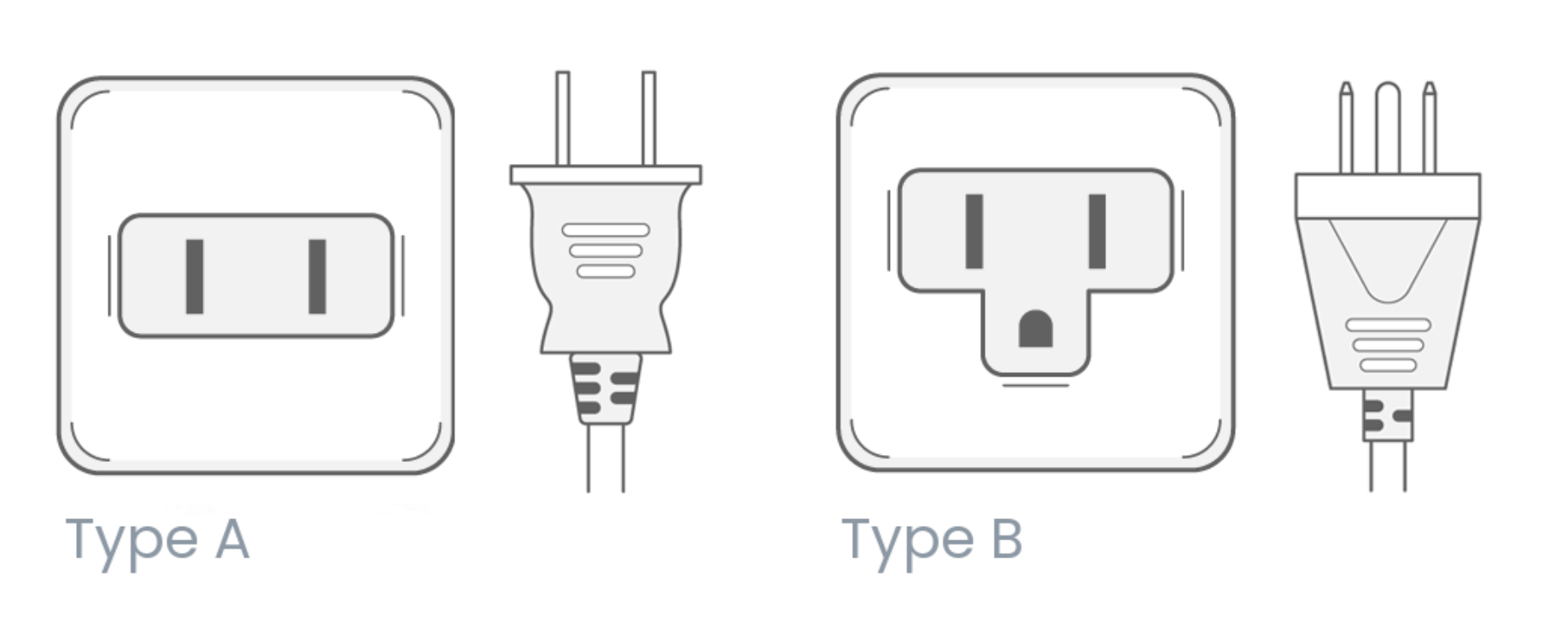
Type A sockets are two-pin flat sockets that can only use Type A plugs and are usually used for low-power devices such as mobile phone chargers and small appliances.
The Type B socket is a two-pin flat socket with a round grounding pin that can use Type A and Type B plugs. The round and two-pin flat design has one more ground wire than the Type A socket. This design can better support the use of high-power devices.
In addition to the United States, these two types of sockets are also common in Canada, Mexico, Japan, Taiwan and other regions. If your electrical appliance uses other types of plugs, you will need to add an additional plug adapter before you can use it.
Do I need to bring an adapter or transformer when traveling to the United States?
Before traveling to the United States, it is recommended to check all electronic devices you bring with you to confirm that their voltage and plugs are compatible with the U.S. electrical system. If you're not sure, it's a good idea to bring a universal adapter plug that can adapt to different countries' socket standards.
For travelers coming from Canada or Taiwan, there is no need to bring a special transformer since the voltage is the same as in the United States. However, if your equipment comes from a place that uses 220 - 240V voltage, such as Hong Kong or the UK, then a transformer will be a necessity to avoid damaging your electronic equipment.
Generally speaking, computers, mobile phones, cameras and other electrical appliances have built-in transformer functions, so there is no need to prepare a separate transformer when traveling to the United States. However, if it is other electrical appliances, such as electric toothbrushes, hair dryers, hairpins, etc., you must pay attention to whether the input voltage of the appliance is compatible. Otherwise, you will need to bring an additional transformer to plug into the adapter to avoid damaging the appliance.
What else should I bring besides the adapter? List of essential items for traveling to the United States
When traveling to the United States, here is a list of some must-have items besides a converter plug.
Travel documents:
Passport (make sure it is valid enough)
Visa or ESTA (depending on the purpose and length of your trip to the United States)
Copy of ID card (for backup in case the original is lost)
Flight and accommodation information:
Electronic ticket or printed ticket information
Confirmation of hotel reservation or accommodation arrangement
Travel insurance:
Medical insurance (insurance covering overseas medical treatment)
travel accident insurance
Payment instrument:
Credit card (widely accepted in the United States)
A small amount of cash (for small payments, especially in small shops or when tipping)
Traveler's checks (optional)
Electronic equipment:
Smartphones and chargers
Laptop or tablet (if needed)
Camera and charger or spare batteries
Power bank (in case your phone runs out of battery)
Navigation and communication:
Paper map or offline map app
A local SIM card in the United States or a global SIM card (convenient for navigation and communication)
Personal care products:
Commonly used medications (especially prescription drugs)
Toiletries (toothbrush, toothpaste, shampoo, etc.)
Sunscreen (the sun is strong in some parts of the United States)
Hand sanitizer or wet wipes
Clothing and shoes:
Choose appropriate clothing based on your destination’s climate
comfortable walking shoes
A change of clothes for many occasions
Travel Gadgets:
Travel storage or compression bag
Travel diary and pen
Small backpack or shoulder bag (for daily travel)
Emergency items:
First aid kit (including basic first aid supplies such as band-aids and bandages)
Multi-purpose tools (such as knives, scissors, etc., subject to aviation safety regulations)
Depending on your travel needs and the specifics of your destination, the packing list can be tailored.
Summary of US Voltage & US Socket Guide
Whether you're traveling to the United States for the first time or you commute to the country frequently, it's crucial to understand U.S. voltage and outlet standards. By preparing in advance, you can ensure that your electronic devices can be used smoothly in the United States and avoid unnecessary trouble and loss. Remember, preparing every detail during your trip can make your journey more enjoyable and secure. I hope this guide can help you successfully navigate the U.S. power system and enjoy a worry-free trip to the United States!